Reconciliation and Transitional Justice
The goal of transitional justice is to address past injustices after the end of violent conflict in order to rebuild trust in the rule of law, to overcome mistrust between societal groups and to make the transition to a peaceful society possible.
The concept of transitional justice rests on truth, justice, reparation and the guarantee of non-recurrence. Both judicial and non-judicial instruments are used, including: national and international truth and reconciliation committees; national, international and hybrid tribunals; reparations; impeachment of specific individuals; and reform of state institutions such as the police, the military and the justice sector to build fairer and resilient systems able to secure reconciliation and the transition to democracy.
Transitional processes can promote the reconciliation between persons, societal groups, as well as the state and its citizens. But reconciliation is also an activity on its own, which includes measures such as overcoming trauma or local mediation.
In the UN system, the Office of the High Commissioner for Human Rights (OHCHR) takes on a leading role in the area of transitional justice and reconciliation. UN, EU and OSCE peace operations also implement important activities, e.g.:
- MINUSCA (Central African Republic)
- EUAM Ukraine
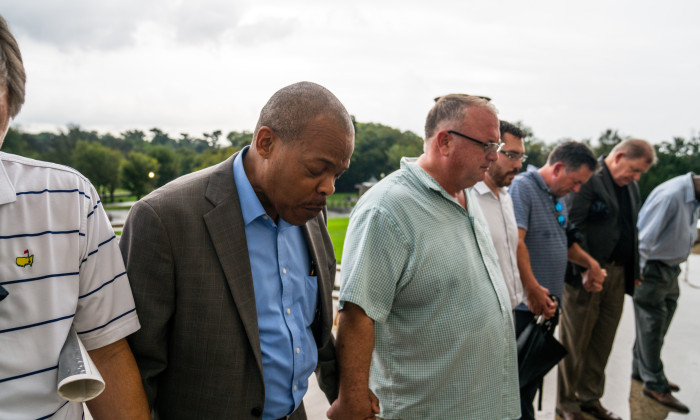 © Chichi Onyekanne/Unsplash
In the UN system, the Office of the High Commissioner for Human Rights (OHCHR) takes on a leading role in the area of transitional justice and reconciliation. UN, EU and OSCE peace operations also implement activities particularly through their work in the areas of >Human Rights, >Rule of Law, as well as >Security Sector Reform.
For example, the UN mission in the Central African Republic (MINUSCA) documented, together with OHCHR and the UN Development Programme (UNDP), grave human rights violations that occurred between 2003 and 2015, and was since 2015 supporting the development of the Special Criminal Court, which has been hearing cases of grave human rights violations since 2022.
From 2008-2018, the EU mission EULEX in Kosovo has been conducting inquiries regarding war crimes, while the OSCE is also supporting the development of rule of law institutions through its presences in the Balkans. In April 2022, the 2014 established EU Advisory Mission for Civilian Security Sector Reform in Ukraine (EUAM Ukraine) was tasked with providing support to Ukrainian authorities to facilitate the investigation and prosecution of international crimes committed in the context of the Russian Federation’s military aggression against Ukraine.
As of 09.02.2026