Maximilian
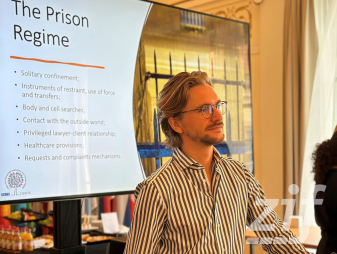
Associate Human Rights Officer on Anti-Terrorism Issues
OSCE Office for Democratic Institutions and Human Rights (ODIHR)
Previous Positions:
- several years various roles within the Human Rights Department of ODIHR, with a focus on combating human trafficking (including the development and establishment of the International Survivors of Trafficking Advisory Council (ISTAC), the first global advisory body composed of experts with lived experience) and the right to freedom of assembly
- Member of the Working Group on Justice and Peace for the awarding of the annual Shalom Peace Prize
- Studied International Relations, Modern and Contemporary History, and Islamic Studies
What are your responsibilities as a human rights expert?
As a human rights expert, I assist the 57 participating States in adopting and implementing counter-terrorism laws, strategies and practices, ensuring that these are in line with international human rights standards and the OSCE States’ commitments in the field of democracy and human rights. In concrete terms, this means that I monitor the respective human rights situation, offer expert advice in the form of policy guidelines on a wide range of topics (e.g. the impact of counter-terrorism measures on civil society) and collaborate with relevant stakeholders both within and outside the OSCE.
A large part of my work involves delivering training to security sector actors such as the police and the prosecution service, and sometimes also to intelligence services and the military, with the aim of promoting human rights whilst effectively combating terrorism.
Why is the work of the OSCE ODIHR in this area so unique and relevant?
Counter-terrorism measures and their consequences can have a huge impact on a wide range of human rights – in every country. For example, overly broad or inadequately defined definitions of the term ‘terrorism’ can lead to arbitrary or excessive application, which can significantly affect the enjoyment of rights. They also carry the risk of discriminatory application.
ODIHR has been active in the field of human rights protection and counter-terrorism since 2002 and can therefore draw on a wealth of expertise and numerous contacts to tackle these challenges in a targeted manner. It is also one of the few intergovernmental organisations worldwide with a specific mandate in this area. A distinctive feature of our work is the promotion of dialogue (keyword: ‘convening power’) between state and non-state actors, as well as other stakeholders who would otherwise often communicate little or not at all with one another, in order to establish and foster a productive and respectful dialogue with the aim of finding responses to terrorism that are consistent with human rights.
What challenges do you face in your day-to-day work?
We view with concern the increasing securitisation of various areas of life and the continuous expansion of the scope of counter-terrorism measures. Human rights are often sidelined in the process. However, excessively harsh, excessive or – worse still – unlawful counter-terrorism measures are counterproductive. In fact, they can create conditions that foster terrorism. Another problem is that the resources available for such an important programme are simply insufficient across all 57 OSCE States. We must therefore carefully weigh up which challenges are the most important (and there are many!) whilst at the same time responding to the diverse requests from governments and civil society.
Why do you work for the ODIHR or the OSCE?
My passion for promoting human rights runs like a thread through my professional and personal life. I joined the ODIHR in Warsaw some years ago, although I knew very little about the Office’s work at the time. In the past, I have worked there in various areas of human rights protection, ranging from combating human trafficking and issues of freedom of assembly to human rights and counter-terrorism. ODIHR’s unique mandate enables me to analyse the human rights situation across the entire OSCE region in detail, working closely with stakeholders from government and civil society to address key issues and promote dialogue aimed at improving peace, security and human rights.
Thanks to the close cooperation and exchange with impressive and dedicated colleagues from a wide range of countries, I always feel encouraged to carry on – even in difficult times.