Humanitarian crisis in Yemen: ZIF welcomes Foreign Minister for expert briefing
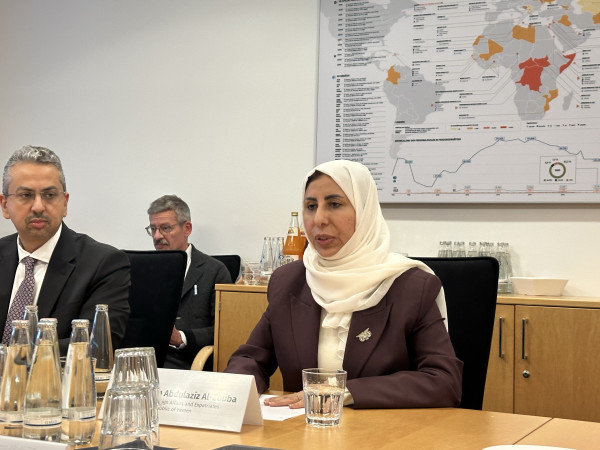
In light of ongoing hostilities and a dramatic deterioration in the humanitarian situation in Yemen, ZIF hosted the Yemeni Minister for Foreign Affairs and Expatriates, H.E. Dr Afrah Abdulaziz Al-Zouba, for a high-level humanitarian briefing in Berlin. The discussion was attended by representatives of the German Bundestag, relevant ministries, humanitarian organisations, foreign embassies, as well as NGOs and think tanks. The discussion focused on the acute nutrition and supply situation the civilian population is facing, the restrictions imposed on humanitarian aid organisations, and the Yemeni government’s close cooperation with the United Nations.
Dramatic situation in embattled regions
Of Yemen’s total population, estimated at over 40 million people, more than 22 million were already dependent on humanitarian aid even before the renewed outbreak of violent hostilities. Due to ongoing military operations, a significant proportion of the civilian population is currently virtually inaccessible to aid organisations, which is making the distribution of life-saving supplies extremely difficult.
Of particular concern is the situation in and around Taiz, the country’s third-largest city, which is under siege by the Houthis. Organisations on the ground, such as the World Food Programme (WFP), are warning of a humanitarian catastrophe due to acute shortages of water, food, medicine and fuel.
Global implications and German support
The outlook for future food security is a further cause for concern: as Yemen is heavily dependent on wheat imports from Ukraine, trade barriers in the Black Sea region have a direct impact on the fragile food situation on the ground, albeit with a time lag of around three months.
In response to the worsening crisis, the Federal Government is increasing its humanitarian aid to Yemen by a further 10 million euros, bringing the total to 38 million euros. German Foreign Minister Wadephul, who met with his Yemeni counterpart earlier that same day, reaffirmed in this context Germany’s willingness to actively support an inclusive political process aimed at ending the violence and stabilising the country.
ZIF would like to thank H.E. Dr Afrah Abdulaziz Al-Zouba for her visit and her valuable insights, as well as all participants for the constructive and important dialogue.