MSC 2026: ZIF and SIPRI discuss the future of international crisis management
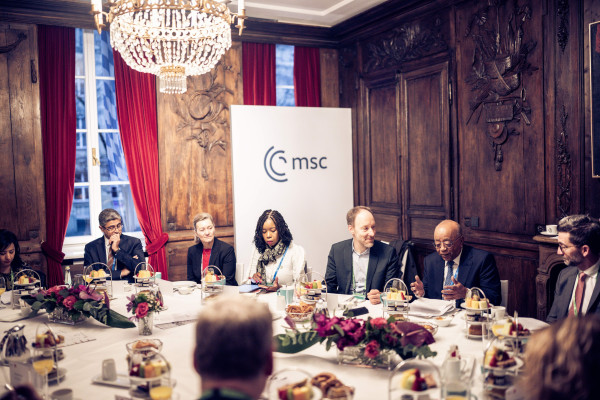 Experts from politics, multilateral organisations and conflict-affected states at the side event organised by ZIF and SIPRI at the Munich Security Conference. © MSC/Andreas Schaad
At the Munich Security Conference 2026, the Center for International Peace Operations (ZIF) and the Stockholm International Peace Research Institute (SIPRI) held a highly topical side event at the Hotel Bayerischer Hof for the fourth time in a row. Under the title ‘Peace on a Shoestring? Maintaining international crisis management in times of financial scarcity,’ international experts from politics, multilateral organisations and conflict-affected states discussed the future of international crisis management under conditions of scarce resources.
This year's MSC was marked by record participation from high-ranking decision-makers and intense debates on the geopolitical situation. Issues of peacebuilding and civil crisis management were not at the centre of the main programme. ‘Rearmament without remilitarisation’ and the use of civil capabilities for political solutions: the side event organised by ZIF and SIPRI provided a forum for debate on these topics.
Global perspectives on multilateral capacity to act
The panel brought together a diverse and global range of voices:
- Mo Ibrahim, Founder of the Mo Ibrahim Foundation, opened the discussion with a critical assessment of the current state of the United Nations, the African Union, and other regional organizations.
- Ottilia Anna Maunganidze from the Institute for Security Studies advocated for smaller, more targeted and context-specific approaches to crisis management in Africa.
- Amre Moussa, former Secretary-General of the Arab League, raised the fundamental question whether the term “crisis management” was too unambitious in view of ongoing conflicts, and called for new partnerships, especially between medium-sized states.
- Habib Ur Rehman Mayar, Deputy Secretary-General of the g7+, highlighted the potential of inter-regional mechanisms and stressed that lessons learned from fragile states could contribute to urgently needed UN reforms.
- Vanessa Frazier, Special Representative of the UN Secretary-General for Children and Armed Conflict, emphasized the role that small and medium-sized UN member states can play in advancing key peace policy priorities, even within the Security Council.
Vanessa Frazier underscored the particular responsibility of member states:
“At a time of profound geopolitical and financial pressure, maintaining effective international crisis management is not optional – it is essential. Multilateralism matters, and as the United Nations approaches its 80th anniversary, its convening power, legitimacy, and global reach matter more than ever. While the UN must continue to reform and strengthen itself, sustained political and financial support from Member States is critical to ensure that UN institutions can deliver the protection, stability, and services that people around the world urgently need.”
New alliances, local knowledge, long-term stabilization
The subsequent discussion made clear that international crisis management must remain operational despite financial constraints. Several participants suggested deepening cooperation with partners from the defence and military sectors, as they have long been aware of the advantages of integrated approaches to peacebuilding and development cooperation.
Participants also emphasized the importance of local expertise, the stabilization of livelihoods, particularly in the context of climate change, and the need for more flexible formats beyond traditional peace operations.
There was agreement that these debates should be included in the main programme of the MSC in future. The coming year will offer a special opportunity for ZIF and SIPRI: 2027 will mark the fifth year of their cooperation at the Munich Security Conference.
ZIF Managing Director Dr Astrid Irrgang also moderated a town hall meeting on the situation in the Sahel entitled ‘Point of Return: Reengaging with the Sahel’ in the official MSC main programme, thereby providing additional impetus for a stronger anchoring of peacebuilding issues on the international security policy agenda.